
Human Resources
From Selection to recruitment, Human Resourcing is a delicate aspect in any company, mistakes cost more than companies know, at least at the beginning.
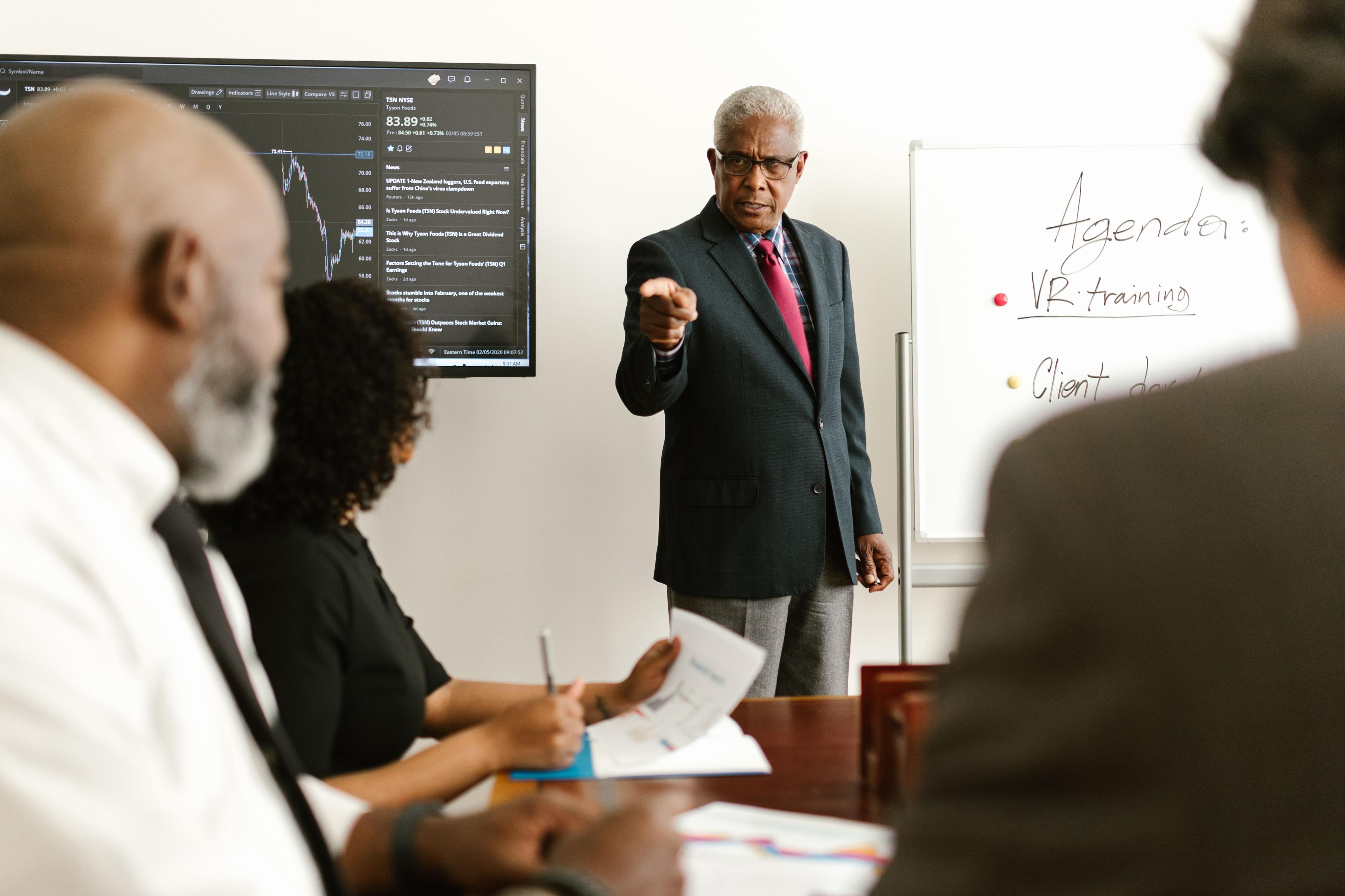
Training Needs Analysis For Directors
About the Workshop
This workshop equips directors with the knowledge and tools needed to identify, assess, and prioritize organizational training needs. It focuses on aligning employee development initiatives with strategic business objectives, evaluating competency gaps, and developing effective training plans that enhance organizational performance and leadership capabilities.
Learning Objectives
By the end of this workshop, participants will be able to:
• Understand the principles and importance of Training Needs Analysis (TNA).
• Identify organizational, departmental, and individual training needs.
• Assess competency gaps and performance development requirements.
• Align training priorities with organizational strategies and objectives.
• Develop and prioritize effective training plans.
• Evaluate training effectiveness and its impact on organizational performance.
Topics Covered
1. Introduction to Training Needs Analysis (TNA).
2. The Strategic Role of Directors in Employee Development.
3. Understanding Organizational Goals and Training Priorities.
4. Identifying Organizational and Departmental Training Needs.
5. Competency Assessment and Gap Analysis.
6. Methods of Collecting Training Needs Data.
7. Analyzing and Prioritizing Training Requirements.
8. Developing Training Plans and Budgets.
9. Linking Training Initiatives to Organizational Performance.
10. Monitoring and Evaluating Training Effectiveness.
11. Practical Exercises and Case Studies.
Methodology
• Interactive presentations and discussions.
• Practical exercises and group activities.
• Case studies and real-life scenarios.
Duration: 6 hours

Talent Acquisition Management
About the Workshop
This workshop gives you the knowledge you need to hire top talent and imparts tried-and-true strategies you can use to stay ahead of the curve, all in a convenient online format.
Learning Objectives
By the end of this workshop, you will be able to:
• Identify the criteria for hiring talent through effective interviewing, cutting edge technologies, internal hiring, and attracting a strong, diverse pool of candidates.
• Use methods, strategies, and tools to increase employee engagement
• Leverage people analytics to transform performance management and avoid common mistakes in talent evaluation
Topics Covered
1. Getting Started
a. Icebreaker
b. Housekeeping Items
c. The Parking Lot
d. Workshop Objectives
2. Introduction to TAM & WF Planning
a. What is Talent Acquisition Management?
b. Challenges and Trends
c. Workforce Planning
d. Analyze Existing Workforce
e. Organizational Chart
f. Review Questions
3. Recruiting & Selection Process
a. R&S Policies, Procedures..
b. Candidate Sourcing, Lead Nurturing, Talent Pipelines
c. JA, JD, & Job Evaluation
d. Review Questions
4. Engaging Talent & Onboarding
a. Succession Planning
b. Employer Branding
c. Review Questions
5. Interviews
a. Definations & Types
b. Behavioral Interview
c. Situational Interview
d. Tests
e. Review Questions
6. Employer Value Proposition (EVP)
a. Remuneration, Working Environments
b. Corporate Culture
c. Review Questions
7. HR Analytics Metrics
a. Time to hire, Turnover, Recruitment cost to hire…
b. Case Study
c. Review Questions
Duration: 15 hours

Recruitment And Selection
About the Workshop
Enable participants to upgrade the quality of hires through the International Standards of the actual sample of Recruitment and Selection case.
Learning Objectives
By the end of this module, participants will be able to:
• Identify talents at the very first stage of the recruitment process (internal and external).
• Enhance their recruitment/interviewing techniques in order to select better quality candidates.
Topics Covered
1. Introduction
a. Overview on the role that HR plays in talent acquisition and retention.
b. What are the characteristics of a talent?
c. Overview on Employment Branding as a system to attract and retain talents
2. Risk Identification and Evaluation
a. How do you go about screening applicants/talents?
b. How does the talents selection interviews process go? (internal candidates and
external applicants)?
c. If possible, for the Recruitment Manager to present an overview to the participants
d. Exercise: participants will
i. Identify the risks inherent to this process.
ii. Evaluate the impact of those risks if they were not properly managed.
iii. Prioritizing risks and agreeing on the priority risks to be controlled.
e. Have you recently had any mis-hire or mis-promotion?
f. Exercise: participants will calculate the cost of this mis-hire or mis-promotion.
g. Why Commonplace Hiring Methods Are So Poor?
3. Risk Mitigation
a. Exercise: Participants will have to recommend some controls over the identified
priority risks.
b. Introduce the Top grading technique and tools (History Form, Snapshots, competency
interview guide) as a control technique to increase the quality of hires.
c. Introduce the evidence based and Behaviorally Anchored Rating Scales, and the best
expected actions to look for as another control technique.
d. Exercise: participants will have to agree over risk controls and to develop those.
e. Participants will then integrate the developed risk controls over the actual
recruitment and selection process.
f. Participants will be practicing the enhanced form sample over role plays with
self/peers/facilitator feedback.
g. Evaluation: measuring recruitment efficiency and effectiveness using KPIs and
metrics.
4. Summary and Conclusion
a. Overview of the International career management and succession planning processes
b. Link the learning and outcome to the International Standards of the Career
Management and Succession Planning processes.
c. Team Assignment: each team will be selecting an actual interview form and adding
the BARS and successful actions to look for. They will have to apply this form over
real interviews.
Duration: 8 hours

Learning And Development
About the Workshop
Enable participants to apply the International Standards Best Practices training needs in order to deliver and evaluate training efforts and quality.
Learning Objectives
By the end of this module, participants will be able to:
• Understand and apply the tools proposed by the International Standards over the input, process and output of the ADDIE model (internal and external trainings).
Topics Covered
1. Introduction
a. Overview on: Organizational learning, Learning, training and development,
knowledge retention, concept and characteristics of Adult Learning and the role a
strategic HR plays in L&D.
2. Risk Identification and Evaluation
a. How do you go about Assessing, Designing, Developing, Implementing and Evaluating
training and development?
b. How do you select external training providers?
c. If possible, for the Learning and Development Manager to present a process overview
to the participants
d. Exercise: participants will:
i. Identify the risks inherent to this process
ii. Evaluate the impact of those risks if they were not properly managed
iii. Prioritizing risks and agreeing on the priority risks to be controlled
e. Have you recently had any training program that missed its set learning objectives?
f. Exercise: participants will calculate the cost of this missed training opportunity.
3. Risk Mitigation
a. Exercise: Participants will have to recommend some controls over the identified
priority risks.
b. Overview on the ADDIE model with the outcome expected at each phase.
c. Introduce the ADDIE model tools and techniques as risk mitigation tools and
techniques over the existing ADDIE practices.
d. Analysis Identify the why of the training (Organizational, Departmental or functional
and Individual levels TNA).
i. Exercise: conducting a 3-level training needs analysis using the actual
needs.
e. Design identifying and describing with action verbs the expected proficiency level out
of the program including indicators according to Bloom’s Taxonomy. To be used as
target for evaluating internal trainings and as requirements to be communicated for
external trainings.
i. Exercise: participants will work in teams; each team will choose a level and
topic over the identified needs, writing training requirements and
specifications set training objectives and use appropriate verbs to describe
the desired outcome and objectives.
f. Development overview on several development practices and activities for
developing internal trainings and for selecting external validation criteria and
elements.
i. Exercise: Given the above design, 2 or 3 methods will be developed by
teams for the related design.
g. Implement: Pilot and implement the developed training.
i. Exercise: each developed design will be piloted with the remaining
audience.
ii. Important Notice: Feedback will focus on the application of the method
rather than on the presentation skills given the scope and timing of this
module.
h. Evaluate overview on the Kirkpatrick’s model with focus on activities and techniques
for evaluating level 3 (Measures a change in behaviour) and level 4 (Measures
organizational results).
i. Exercise: teams will be developing the tools for evaluating level 3 and then
for evaluating level 4 for the trainings which they have developed and
implemented.
i. Process Review: have a retrospective on the efficiency (efforts) and effectiveness
(results) of the training delivered from assessment to evaluation so participants.
i. Exercise: each team will review their respective trainings and will conclude
lessons learnt and improvements on their methods and styles.
4. Summary and Conclusion
a. Link the learning and outcome of this module to the International Career
Management and Succession Planning processes.
b. Team Assignment: each team will be applying the controls over the ADDIE model to
selected actual needs.
Duration: 4 hours
Job Analysis And Job Design
About the Workshop
The first line drawn in the design for human resources is the job description, which starts from a draft and ends with the job design. This workshop will put the first brick to build strategy that effect on recruitment, training, development, evaluation and monitoring.
With our Job Description and Job Design workshop your participants will gain better analysis skills and write the job analysis from draft till the design.
Learning Objectives
Upon completion of workshop participants will be able to:
• Develop and write job description
• Identify the required task and duties
• Develop the Job Analysis skills
• Interview skills
• Job family identification
Target Audience
• Anyone who has a business administration degree
• Anyone who works at HR field
Topics Covered
1. Job Analysis
a. Application of job analysis
b. Elements of a job analysis
c. Job specification
2. Methods of Analysis
a. Self-reporting
b. Direct observation
c. Interviews
d. Document reviews
e. Questionnaire and surveys
3. Job Design
a. Comparative framework
b. Job design & technology
c. Job characteristics enrichment
Methodology
• Learning Concepts/Presentations
• Group Activities and Discussions
• Individual and Team Exercises
Duration: 6 Hours

Human Resource Management
About the Workshop
In recent years, tasks that were originally thought to fall under the responsibility of the human resources department have become a part of many managers' job descriptions. The sharing and diffusion of these tasks throughout the organization has had an impact particularly on those that are not equipped with the skills or knowledge to deal with these issues.
The Human Resource Management workshop will give managers the basic tools to handle numerous human resource situations such as interviewing, orientation, safety, harassment, discrimination, violence, discipline, and termination. This workshop will provide your participants those skills and assist them with certain Human Resource situations.
Topics Covered
1. Describe the implications of different aspects of Human Resource Management on your daily responsibilities
2. Define human resources terms and subject matter
3. Recruit, interview, and retain employees more effectively
4. Follow up with new employees in a structured manner
5. Be an advocate for your employees’ health and safety
6. Provide accurate, actionable feedback to employees
7. Act appropriately in situations requiring discipline and termination
8. Evaluate some of the strengths and opportunities for Human Resources in your own workplace
9. Identify three areas for further development within the Human Resources field as part of a personal action plan
Duration: 12 Hours

HR For Non-HR Professionals
About the Workshop
This workshop is designed to help line managers manage their staff better by equipping them with the critical skills of HR. HR for Line Managers focuses on the key issues for line managers, such as handling employee interviews, on-boarding, appraisals, training and grievances...and much more
Learning Objectives
By the end of this workshop, participants will be able to:
• List and apply manager's HR functions
• Define the roles and responsibilities of managers in recruitment and onboarding
• Conduct effective performance appraisal meetings
• Identify and evaluate training needs
• Handle employees’ complaints, grievances and turnover
Target Audience
This workshop will appeal to a wide range of audiences and is intended for Line managers, head of departments, team leaders and supervisors and anyone who wishes to gain knowledge and skills about the human resources functions and how to apply them effectively in his/her department.
Target Competencies
• Recruitment and selection
• Job orientation
• Performance management
• Coaching
• Training and development
• Handling complaints
• Problem solving
Topics Covered
1. Getting the right people
a. What HR is really about
b. Ally with HR department
c. The HR functions of managers
d. Workforce planning
e. Attracting the right talent through referrals
f. Interviewing skills for line managers
g. Building a job profile
h. Preparing technical assessments
2. Welcoming a new family member
a. Onboarding - job orientation
b. Benefits of induction and orientation program to employees and organization
c. First day on the job
d. Induction content
e. Role and responsibility of the new employee’s manager during the first few days
f. Values, culture and code of conducts
g. Evaluating effectiveness of On-boarding
3. Performance management
a. Definition of performance management
b. Overview of the annual performance cycle
c. Mistakes in performance management
d. Employee assessment best practices
e. 360 degree versus 180 degree
f. Coaching, counseling and mentoring
4. Training and development
a. Identifying training needs
b. Career development
c. Succession planning
d. Building a personal development plan
e. Learning styles
f. On the job training
g. Evaluating training effectiveness
5. Handling employee complaints
a. Employee moral
b. The definition of a grievance
c. Grievances versus complaints
d. The grievance handling procedures
e. Your role before, during and after the exit interview
f. Analyzing turnover
g. Healthy versus unhealthy turnover
Duration: 12 hours

Conduct Annual Employees Reviews Workshop
About the Workshop
An annual review can help you keep your employees happy, engaged, and focused. It is human nature to want to succeed. Giving your employees feedback on their positive and negative attributes is part of the pathway to success. A poorly designed annual review can have the reverse effect.
With our Conducting Annual Employee Reviews workshop, your participants will discover how to conduct a well-designed employee review. By determining the categories for an annual review and understanding how it affects employee compensation, an overall increase in performance should be seen throughout your organization.
Workshop Objectives
1. Understand the process of conducting an annual review.
2. Determine the categories for an annual review.
3. Know the mistakes managers make during an annual review.
4. Understand the concept of pay for performance.
5. Know how to tie employee compensation to firm-wide returns.
6. Know the value of employee communication.
7. Gauge employees’ happiness.

Compensation And Benefits
About the Workshop
This workshop guides participants in the process of designing a proper salary structure through leading a job analysis initiative and conducting a salary survey.
Learning Objectives
Upon completion of workshop participants will be able to:
• Define the elements of the employee’s salary
• List typical employee benefits
• Undergo a job evaluation initiative
• Conduct a salary survey
• Design a simple salary structure
Target Audience
This course will appeal to a wide range of audiences and is intended for HR specialists.
Topics Covered
1. The Compensation and Benefits Strategy
a. Internal and External Equity
b. Entitlement Culture Versus Performance Culture
2. Manpower Planning Overview
a. HR Planning Process
b. Elements of Manpower Planning
c. Forecasting
d. Supply Analysis
3. The Employee Salary
a. Basic Salary
b. Other
4. Employee Benefits
a. Benefits According to The Lebanese Code of Labour
b. Additional Benefits
5. Job Evaluation Methods
a. Ranking Method
b. Classification Method
c. Point Method
6. Salary Surveys
a. Salary Survey Methodology
b. Identification of Benchmark Jobs
c. Interpretation of Salary Survey Results
7. Salary Structures
a. Traditional Salary Structures Versus Broad Banding
b. Steps for Building A Salary Structure
Methodology
• Learning Concepts/Presentations
• Group Activities and Discussions
• Tips and Tools
• Individual and Team Exercises
• Role Plays/Case Studies
• Educational Videos
• Action Plan to ensure Application of the Learning
Duration: 12 hours

Career Development And Succession Planning
About the Workshop
60% of organizations have no process for succession planning. This interactive course will enable you to consider the latest methodologies and strategies related to successful engagement, career development and succession planning. The course is also designed to provide tips to create a clear career path and help build your bench. In addition, it will help you plan a succession strategy for a flexible and sustainable business.
Learning Objectives
By the end of this workshop, participants will be able to:
• Demonstrate understanding of the basics of career development and succession planning
• Distinguish succession planning and management from replacement planning, talent management and human capital management
• Compare traditional HR focus with career planning-oriented HR focus
• Explain the role of employee and employer in career development
• Apply innovative corporate career development initiatives
• Evaluate and operate an effective succession planning program to close the developmental gaps in the organization
• Prepare individual development plans and manage career choices
Target Audience
This course will appeal to a wide range of audiences and is intended for Human resources managers, line managers, HR business partners, team leaders and specialists.
Target Competencies
• Deciding and initiating action
• Working with people
• Relating and networking
• Persuading and influencing
• Presenting and communicating
• Analytical thinking
• Following instructions and procedures
• Planning and organizing
• Achieving goals and objectives
• Applying expertise and technology
• Formulating concepts and strategies
Topics Covered
1. Putting People First
a. Putting People Before Numbers
b. People’s Wants from Their Organizations
c. Organizations’ Wants
d. Disengagement and The Downward Performance Spiral
e. HR Activities: Traditional Focus Versus Career Development Focus
f. Talent Management
g. Human Capital Positioning
2. The Basics of Career Management and Succession Planning and Management
a. Careers Today: The Importance of Development
b. Definition of Career Development
c. The Career Development Process and Links With HR
d. Essential Elements in An Integrated Career Development System
e. Definition of Succession Planning
f. Main Aims and Reasons for Establishing A Succession Planning and Management
System
g. Distinguishing Succession Planning from Replacement Planning
h. Time for Some Motivation
i. What Is A Career Plan?
3. Organizational Structure
a. Principles of an effective Organizational Chart
b. Role of HR in the development of Organizational Charts
4. Organizational Readiness for Change
a. Promoting A Development Culture
b. Characteristics of A Development Culture
c. Career Development as A Change Agent
d. Roles and Responsibilities in A Development Culture
5. Identifying High Potentials
a. Key Positions
b. High Potentials and High Professionals
c. Assessing Individual Potential
d. Best Practices to Improve the Management of High Potentials
e. Qualities of Processes to Spot, Develop, And Retain High Potentials
6. Career Development: Tools and Methodologies
a. Competencies: The Foundation for Career Development
b. Competencies Framework
c. Coaching: An Essential Managerial Function
d. Mentoring: A Must Have System for Career Development
e. Career Counselling Services
f. Career Ladder
g. Job Rotation
7. Developing Internal Successors
a. Making the Business Case for Succession Planning and Management
b. Starting the Systematic Succession Planning and Management Program
c. Refining the Program
d. Assessing Present Work Requirements and Individual Job Performance
e. Assessing Future Work Requirements and Individual Potential
f. Closing the Development Gap: The Individual Development Plan (IDP)
g. Designing the Individual Development Plan
h. Definition of Succession Planning
i. Why Have A Succession Planning and Management System in Place?
j. Succession Planning Vs. Replacement Planning
k. Tips for Succession Planning
l. Synchronized Processes & Activities => Talent Management
Methodology
The course uses a mix of interactive training techniques such as lectures, case studies, and group activities. The course also presents best practices in the areas of career development and succession planning and invites participants to share their organizational experiences in order to optimize the learning process.
Duration: 6 hours