

Customer Servicing and Care
Customers are the reason for our existence in companies, the more that simple concept is understood, the closer success gets.

Handling Difficult Customers / Customer Servicing and Care
About the Workshop
At first glance, handling a difficult customer may seem like a thankless job.
Fortunately, you can develop skills to adapt to the challenges difficult customers pose and extend these skills to handling difficult people and situations throughout your daily life.
By improving the focus of your thoughts and feelings, how you manage stress, and how well you listen to and empathize with others, you will be better able to meet the challenges other people pose in both your professional and personal life.
Implementing the guidelines in this module is the first step in a process towards forever changing how you interact with others.
Learning Objectives
By the end of this workshop, participants should be able to:
• Cultivate a positive attitude
• Manage internal and external stress
• Develop abilities to listen actively and empathize
• Build a rapport with customers in person and over the phone
• Understand the diverse challenges posed by customers
• Develop strategies to adapt to challenging circumstances
• Handle complaints effectively
• Handle difficult customers
Topics Covered:
1. The Right Attitude Starts with You
• Make Gratitude a Habit
• Keep Your Body Healthy
• Invoke Inner Peace
2. Stress Management (Internal Stressors)
• Irritability
• Unhappiness With Your Job
• Feeling Underappreciated
• Not Well Rested
• Stress Management (External Stressors)
• Manage Your Work Space
• Loud Work Environment
• Co-Worker Relations
• Demanding Supervisor
3. Transactional Analysis
• What is Transactional Analysis
• Parent
• Child
• Adult
• Why are Some Customers Difficult
• They Have Truly Had a Bad Experience and Want to Vent
• Want Someone to be Held Accountable
• They Have Truly Had a Bad Experience and Want Resolution
• They are Generally Unhappy
4. Dealing with the Customer Over the Phone
• Listen to the Customer’s Complaint
• Build Rapport
• Do Not Respond with Negative Words or Emotion
• Offer a Verbal Solution to Your Customer
5. Dealing with the Customer In Person
• Listen to the Customer’s Concerns
• Build Rapport
• Respond with Positive Words and Body Language
• Aside from Words
6. Sensitivity in Dealing with Customers
• Customers who are Angry
• Customers who are Rude
• Customers with Different Cultural Values
• Customers who Cannot be Satisfied
7. Scenarios of Dealing with a Difficult Customer
• Angry Customer
• Rude Customer
• A Customer from Another Culture
• An Impossible to Please Customer
8. Following up With a Customer Once You Have Addressed Their Issue
• Call the Customer
• Send the Customer an Email
• Mail the Customer a Small Token
• Snail-Mail a Handwritten or Typed Letter
9. Lessons Learned
• Post Assessment
• Action Plan
Duration: 9 Hours
Emotional Intelligence / Customer Servicing and Care
About the Workshop
Emotional intelligence describes the ability to understand one’s own feelings. It also provides great insight on how emotion influences motivation and behavior. The concepts of Emotional Intelligence have been around since the early 20th century, but the term was first introduced by Wayne Payne in 1985.
With our Emotional Intelligence workshop your participants will gain a better understanding of self-management and self-awareness. This in turn will give them better insight and control over their actions and emotions. With a greater understanding of emotions your participant’s will experience a positive impact on their professional and personal lives.
Learning Objectives
Upon completion of workshop participants will be able to:
• Recognize what is Emotional Intelligence
• Develop your Emotional Intelligence
• Develop your Organization’s Emotional Intelligence
• Learn how to Connect with Others
Topics Covered
1. What is Emotional Intelligence
a. Introduction
b. History of Emotional Intelligence
c. Intelligence Quotient V.S Emotional Intelligence
d. Competency Framework
2. Building Your Emotional Intelligence
a. The Business Case
b. Assessing Your Emotional Intelligence
c. Identifying the Areas for Improvement
3. Self-Awareness
a. Understanding Yourself
b. Understanding Your Brain
c. The Johari Window Model
d. The Self-Awareness Tool
4. Self-Management
a. Self-Regulation
i. Self-Control
ii. Trustworthiness
iii. Conscientiousness
iv. Innovativeness
v. Adaptability
b. Self-Motivation
i. Achievement Drive
ii. Commitment
iii. Initiative
iv. Optimism
5. Social-Awareness
a. Reading Others
b. Developing Empathy
c. Understanding Diversity
d. Understanding Different Communication Styles
6. Relationship Management and Social Skills
a. Communicating with Others
b. Active Listening
c. Developing Others
d. Conflict Management and Problem Solving
Methodology
• Learning Concepts/Presentations
• Group Activities and Discussions
• Tips and Tools
• Individual and Team Exercises
• Role Plays/Case Studies
• Educational Videos
• Action Plan to ensure Application of the Learning
Duration: 12 hours
Creative Problem Solving / Customer Servicing and Care
About the Workshop
Providing excellent customer service requires more than following standard procedures; it requires the ability to think creatively, identify challenges, and develop effective solutions. This workshop equips participants with practical problem-solving techniques to handle customer complaints, manage difficult situations, overcome service-related challenges, and improve the overall customer experience.
Learning Objectives
By the end of this workshop, participants will be able to:
• Identify common challenges in customer service and care.
• Analyze customer problems and identify their root causes.
• Apply creative thinking techniques to generate effective solutions.
• Handle customer complaints and difficult situations constructively.
• Make appropriate decisions under pressure.
• Develop practical solutions that improve customer satisfaction.
• Turn service challenges into opportunities for improvement.
Topics Covered
1. Understanding Problem Solving in Customer Service
• Common customer service challenges.
• Types and sources of customer complaints.
• The importance of proactive problem-solving.
• The impact of unresolved problems on customer satisfaction.
2. Identifying and Analyzing Problems
• Recognizing and defining the real problem.
• Understanding customer needs and expectations.
• Identifying root causes.
• Gathering relevant information and feedback.
3. Creative Thinking and Solution Generation
• Overcoming barriers to creative thinking.
• Brainstorming and mind mapping.
• Thinking outside the box.
• Exploring alternative solutions.
• Applying creative techniques to real customer service scenarios.
4. Handling Complaints and Difficult Situations
• Managing dissatisfied and demanding customers.
• Active listening and empathy.
• De-escalation and conflict management.
• Responding professionally under pressure.
• Turning negative experiences into positive outcomes.
5. Decision-Making and Implementing Solutions
• Evaluating available solutions.
• Selecting the most appropriate response.
• Balancing customer satisfaction with organizational policies.
• Taking ownership and following up.
• Learning from feedback and preventing recurring problems.
• Customer service case studies.
• Group problem-solving exercises.
• Role-playing challenging customer interactions.
• Developing action plans for service improvement.
Training Methodology
• Interactive presentations and discussions.
• Brainstorming and creative thinking exercises.
• Case studies and real-life scenarios.
• Role-playing and group activities.
• Practical problem-solving exercises.
Duration: 6 Hours
Business Etiquette and Professionalism / Customer Servicing and Care
About the Workshop
Professional etiquette and conduct play an essential role in building positive relationships, creating a strong professional image, and maintaining a respectful workplace. This workshop equips participants with the knowledge and practical skills needed to communicate effectively, demonstrate professional behavior, follow workplace etiquette, and interact confidently with colleagues, clients, and business partners.
Learning Objectives
By the end of this workshop, participants will be able to:
• Understand the principles of business etiquette and professional conduct.
• Create a positive and professional first impression.
• Apply appropriate verbal and non-verbal communication skills.
• Demonstrate proper etiquette in meetings, telephone calls, and written communication.
• Handle different workplace and business situations professionally.
• Build respectful and productive relationships with colleagues and clients.
• Represent their organization with confidence and professionalism.
Topics Covered
1. Introduction to Business Etiquette and Professionalism
• Definition and importance of business etiquette.
• Professional behavior and workplace standards.
• The impact of professionalism on organizational image.
2. Professional Image and First Impressions
• Personal appearance and grooming.
• Body language and non-verbal communication.
• Introductions, greetings, and professional interactions.
3. Effective Business Communication
• Verbal and non-verbal communication.
• Active listening and appropriate language.
• Email and written communication etiquette.
• Telephone and online communication etiquette.
4. Workplace Etiquette
• Respectful interaction with colleagues.
• Punctuality and time management.
• Workplace behavior and professional boundaries.
• Handling disagreements and difficult situations.
5. Meetings and Business Interactions
• Meeting preparation and participation.
• Professional meeting etiquette.
• Business introductions and networking.
• Interacting with clients and business partners.
6. Building a Professional Attitude
• Accountability and responsibility.
• Emotional intelligence and self-control.
• Confidentiality and discretion.
• Maintaining a positive and respectful work environment.
Training Methodology
• Interactive presentations and discussions.
• Practical exercises and role-playing.
• Workplace scenarios and case studies.
• Group activities and feedback.
Duration: 6 Hours

The Rapport Building Server
About the Workshop
Waiting staff is all staff from Head waiter to busser.
Apart from the knowledge and ability waiting staff has, skills and competency when it comes to interpersonal skills in this dimension, is crucial.
This workshop focuses on the much-needed rapport building set of skills that make guests come back for more of the service as well as the food and beverages served.
Learning Objectives
By the end of this workshop, participants will be able to:
• Build trust
• Understand trust and rapport better
• Build a solid, professional relationship with their guests
• Maintain loyalty of guests
Covered Topics
1. Active Listening
2. Posture and movement
3. Respect
4. Appearance matters
5. Empathy
6. External factors affecting rapport building
7. Keep them loyal
Duration: 6 Hours

The Perfect Operator
About the Workshop
Answering the phone can be a daunting task, especially when it is someone difficult on the line, or when the operator is unable to understand what is being required or spoken about.
This workshop equips participants with the needed skills to properly operate the telephone.
Learning Objectives
By the end of this workshop, participants will be able to:
• Give the best first impression
• Communicate effectively
• Take messages properly
• Practice the correct etiquette
• Assess themselves
Topics covered
1. First impressions
2. Telephone communication techniques
3. Voice mail messages
4. Importance of a positive image
5. Voice characteristics
6. Telephone etiquette
7. Self-Assessment
Duration: 3 Hours
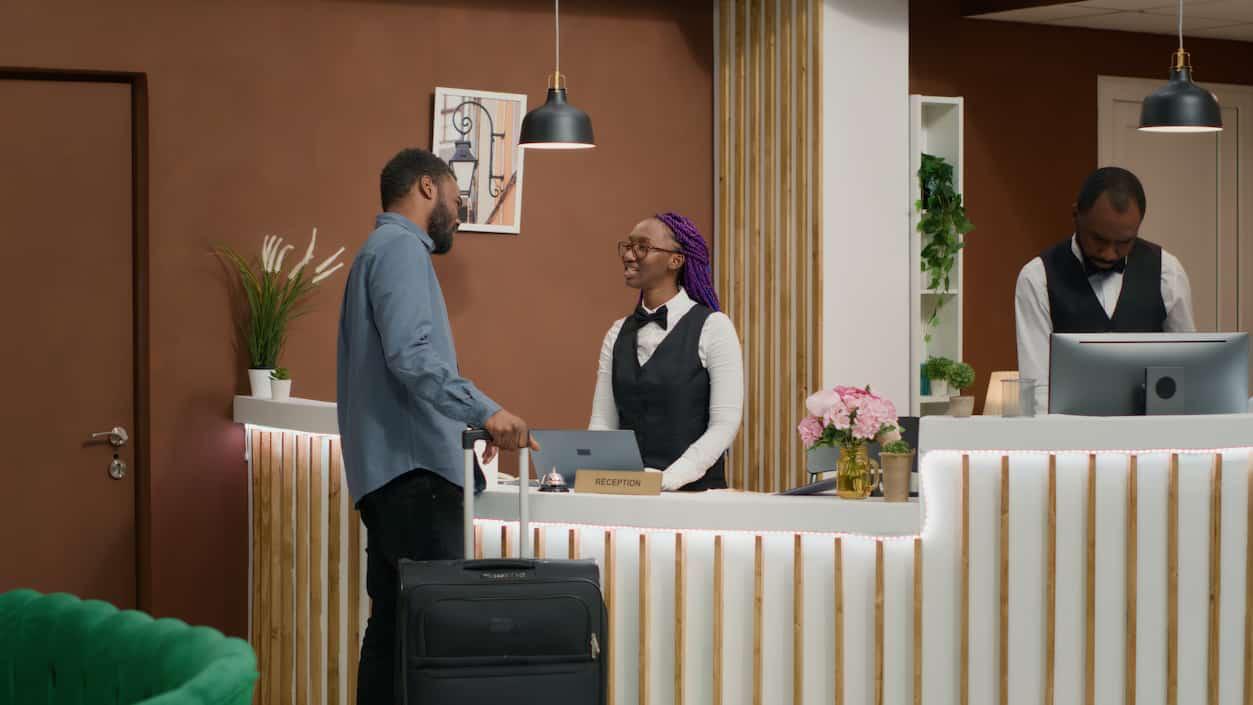
The Hospitable Receptionist
About the Workshop
When people interact with establishments by calling, faxing, emailing or physically visiting, the receptionists are the person responsible for greeting and taking care of their needs, either by pointing them toward the person who can help them or directly.
This content rich workshop, equips participants in the roles of receptionists to stand out and shine through their skill and ability to excel at their jobs.
Learning Objectives
By the end of this workshop, participants will be able to:
• Understand their role and responsibilities
• Handle difficult people
• Start and end their shifts properly
• Better organize themselves
• Excel at their jobs
Topics covered
1. Beginning the shift
a. Opening the office
b. Relieving another receptionist
c. At the desk
2. During the shift
a. Etiquette
b. Making a to do list
c. Managing the front desk
d. Welcoming, guiding and escorting
e. Managing visits and calls simultaneously
f. Registering
g. Managing appointments
h. Filing
i. Technology to the rescue
3. Ending the shift
a. Organizing pending works
b. Clearing your desk
Duration: 4 Hours

The Customer Focused Cashier
Subjects
- Customer service
- Corporate identity reflection
- Dealing with difficult customers
- Grooming
Summary
This workshop is designed to mould cashiers in to customer focused individuals with a goal to meet customers’ final expectations and be part of a very important aspect of the whole mission, adopt a unified objective, understand customer’s needs at the end of the shopping experience vs. At the beginning, be aware of common problems and address issues in a proper manner all while maintaining loyalty.
Who should attend?
• Cashiers
Covered Topics
1. Objectives
2. First Impressions versus Last Impressions
3. Work Ethics
4. Working by the Book
5. Personality Types
6. Dealing with Difficult Customers
7. Common Problems
8. Hygiene and Grooming
Approach
• Visual/Audio techniques
• Story telling
• Case studies
• Practice
Duration: 9 hours

Delivery of Satisfaction
About the Workshop
Delivery personnel are the reflection of the establishment they are delivering from to the client
Whether it is food or other items, the job of delivering is subjected to many factors that make it either a successful delivery of one that could completely mess up the relationship the client has with the establishment.
This workshop focuses on the essentials a delivery person should have to be the best at their job.
Learning Objectives
By the end of this workshop, participants will be able to:
• Look good
• Act properly
• Learn the basics of etiquette
• Adopt the best practices in their field
• Not let issues get out hand without supervision
Covered Topics
1. Hygiene and Grooming
2. The Pick up
3. The Vehicle
4. The Delivery Bag
5. On the Road
6. The Drop off
7. In the event of conflict or dissatisfaction
Duration: 6 Hours

Customer Support
About the Workshop:
Customer support used to mean a face-to-face conversation with a customer, or a phone call. Today, technology has changed how we approach customer support. It now encompasses the internet, websites, webchats, and even smart phone apps. The customer experience begins long before the purchase is made.
In this workshop, your participants will discover the new opportunities in customer support services via the internet, but also how to use these opportunities to their advantage.
Learning Objectives:
By the end of this workshop, participants will be able to:
• Define customer support
• Know the different venues for customer support
• Recognize challenges of customer support
• Learn different applications
• Know proper forms of documentation
• Learning to be proactive in customer support
Topics Covered:
1. What Is Customer Service?
• Support vs. Service
• Who Participates?
• Metrics
• Trends
2. Challenges
• Customer Challenges
• Crisis
• Ticket Backlogs
• End Relationship with Customer
3. Email
• Formal Yet Conversational Style
• Scripted Yet Authentic
• Explain Information Carefully
• Results
4. SMS
• Convenience of Texting
• Apps and Software Available
• Information to Communicate
• Professional Communication Through Text
5. Webchat
• Personalize
• Apps and Software Available
• Real Time Support
• Etiquette
6. Multi-Channel Apps
• Different Multi-Channel Apps
• Pros
• Cons
• Making a Decision
7. Support Ticket Apps
• Different Support Ticket Apps
• Pros
• Cons
• Making a Decision
8. Documentation
• What to Document
• Using Tools
• Prepare Documentation
• Retain
9. Feedback
• Surveys
• Boxes
• Analytics
• Usability
10. Be Proactive
• Research Analytics
• Discover Opportunities
• Prevent Problems
Provide Support Before People Know They Need It
Duration: 9 Hours

Customer Service
About the Workshop:
Each and every one of us serves customers, whether we realize it or not. Maybe you're on the front lines of a company, serving the people who buy your products. Perhaps you're an accountant, serving the employees by producing their pay checks and keeping the company running. Or maybe you're a company owner, serving your staff and your customers.
The Customer Service workshop will look at all types of customers and how we can serve them better and improve ourselves in the process. Your participants will be provided a strong skillset including in-person and over the phone techniques, dealing with difficult customers, and generating return business.
Learning Objectives:
By the end of this workshop, participants will be able to:
• State what customer service means in relation to all your customers, both internal and external
• Recognize how their attitude affects customer service
• Identify their customers’ needs
• Use outstanding customer service to generate return business
• Build good will through in-person customer service
• Provide outstanding customer service over the phone
• Connect with customers through online tools
• Deal with difficult customers
Topics Covered:
1. Who We Are and What We Do
• Who Are Customers?
• What Is Customer Service?
• Who Are Customer Service Providers?
2. Establishing Your Attitude
• Appearance Counts!
• The Power of a Smile
• Staying Energized
• Staying Positive
3. Identifying and Addressing Customer Needs
• Understanding the Customer’s Situation
• Staying Outside the Box
• Meeting Basic Needs
• Going the Extra Mile
4. Generating Return Business
• Following Up
• Addressing Complaints
• Turning Difficult Customers Around
5. In-Person Customer Service
• Dealing with At-Your-Desk Requests
• The Advantages and Disadvantages of In-Person Customer Service
• Using Body Language to Your Advantage
6. Giving Customer Service over the Phone
• The Advantages and Disadvantages of Telephone Communication
• Telephone Etiquette
• Tips and Tricks
7. Providing Electronic Customer Service
• The Advantages and Disadvantages of Electronic Communication
• Understanding Netiquette
• Tips and Tricks
• Eliminate Electronic Ping Pong
8. Recovering Difficult Customers
• De-Escalating Anger
• Establishing Common Ground
• Setting Your Limits
• Managing Your Own Emotions
9. Understanding When to Escalate
• Dealing with Vulgarity
• Coping with Insults
• Dealing with Legal and Physical Threats
10. Ten Things You Can Do to WOW Customers Every Time
• Ten Tips
Duration: 12 Hours